
In oil and gas drilling operations, the drill string is a critical component that operates under extreme pressure, torque, vibration, and harsh downhole conditions. Without proper maintenance and monitoring, drill string failure can lead to costly downtime and equipment damage.
When drill string failures occur, they can lead to costly downtime, equipment damage, non-productive time (NPT), and major operational delays. Understanding the common causes of drill string failure and implementing preventive measures is essential for improving drilling efficiency, safety, and overall tool life.
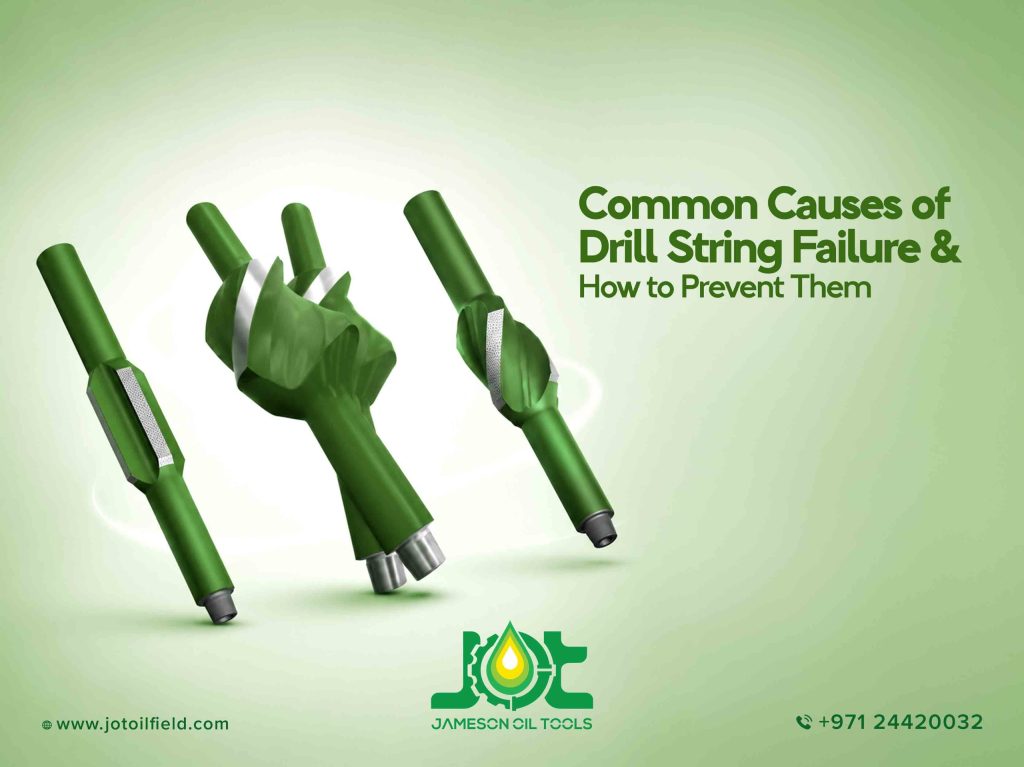
A drill string is an assembly of drill pipes, drill collars, stabilizers, and other downhole tools connected together to transmit drilling power from the surface to the drill bit.
During drilling operations, the drill string is continuously exposed to:
Because of these demanding conditions, proper maintenance and operational practices are critical.
1. Fatigue Failure
Fatigue is one of the most common causes of drill string damage. Repeated bending, rotation, and cyclic loading gradually weaken the metal over time.
Common causes of fatigue include:
Fatigue cracks often begin as microscopic defects and grow until sudden failure occurs.
Prevention Methods:
2. Corrosion Damage
Drill strings frequently operate in corrosive environments containing:
Corrosion weakens the metal structure and accelerates crack formation, increasing the risk of failure.
Prevention Methods:
3. Excessive Torque and Drag
High torque and drag are common challenges in directional and extended-reach drilling operations.
When friction between the drill string and wellbore increases excessively, it can cause:
Prevention Methods:
4. Vibration and Shock Loads
Downhole vibration can severely affect drill string performance and tool life.
Common vibration types include:
These vibrations create excessive stress on drill pipes, stabilizers, and drilling tools.
Prevention Methods:
5. Improper Tool Handling
Poor handling during transportation, storage, or rig operations can create hidden damage that later develops into major failures.
Examples include:
Prevention Methods:
6. Poor Maintenance and Inspection
Skipping routine inspections can allow minor damage to grow into serious failures.
Undetected issues may include:
Prevention Methods:
Preventive maintenance plays a major role in extending drill string life and reducing operational risks.
A proactive maintenance strategy helps:
Routine inspections and proper refurbishment can significantly improve tool reliability in demanding drilling environments.
To improve drilling performance and reduce failures, operators should focus on:
Combining these practices helps minimize operational risks while maximizing drilling efficiency.
Drill string failures can have a major impact on drilling operations, leading to costly downtime, equipment damage, and safety concerns. Understanding the root causes such as fatigue, corrosion, torque and drag, vibration, and improper handling is essential for preventing failures and improving operational performance.
By implementing proper maintenance, inspection, and operational practices, oilfield operators can significantly extend drill string life and reduce non-productive time. With growing demands for efficiency and reliability in modern drilling operations, proactive drill string management remains a critical part of successful oilfield performance.
Browse our comprehensive catalogue for a diverse range of high-quality oil and gas equipment solutions.