
In oilfield operations, tool failure is never just an equipment problem - it is a safety risk, a cost driver, and a source of non-productive time (NPT). Every stabilizer, mill, fishing tool, and crossover sub that enters the wellbore must perform under extreme torque, pressure, vibration, and abrasion. This level of reliability is not achieved at the final inspection table. It is built into the tool at every stage of manufacturing.
In this article, JOT Oilfield Services, a trusted oil & gas equipment supply & service company, walks through the complete quality control journey - from raw material verification to final release - that separates dependable downhole tools from costly liabilities.
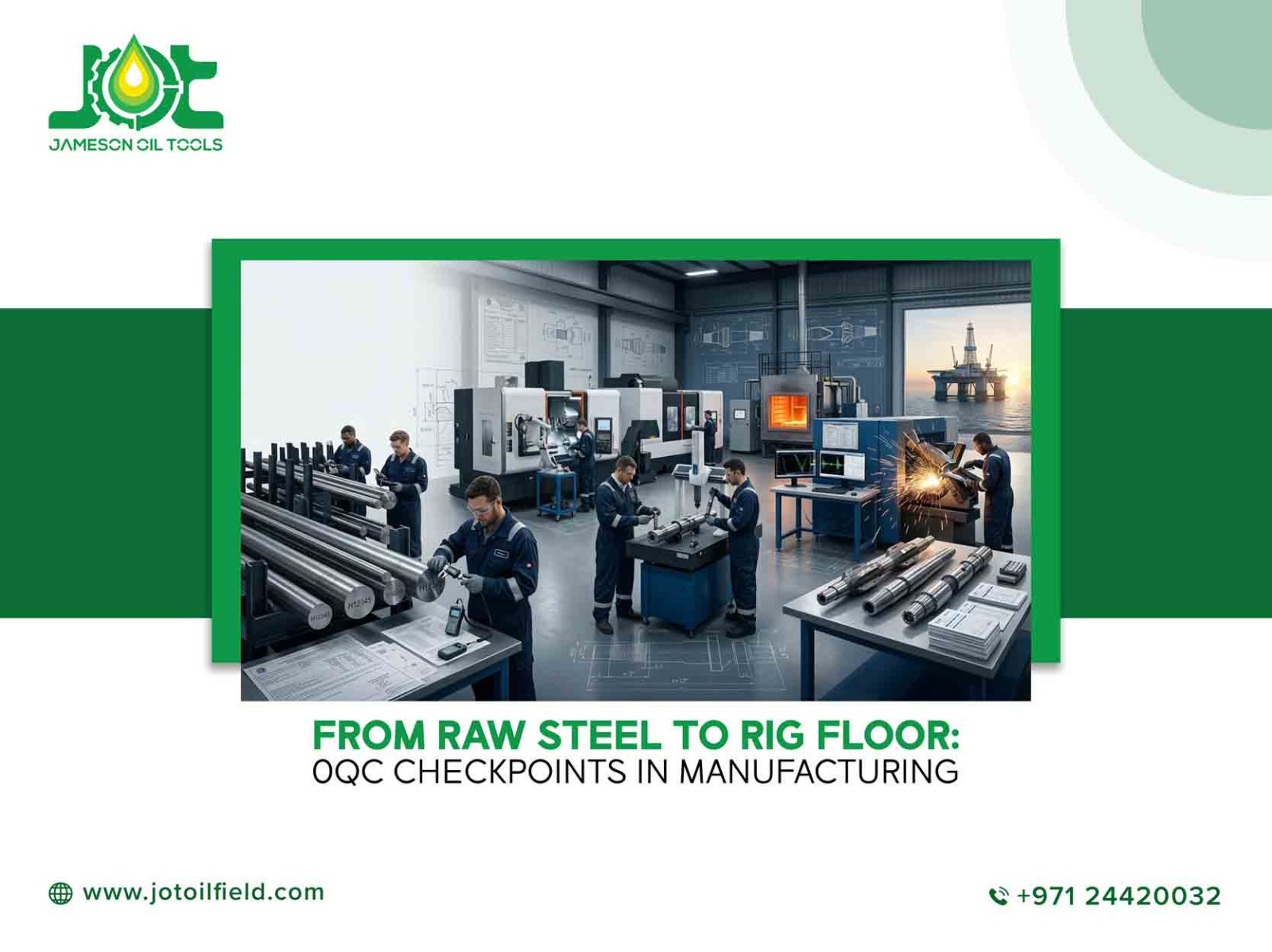
A downhole tool is only as strong as its weakest checkpoint. A perfect thread on a tool made from uncertified steel will still fail. Flawless machining cannot compensate for improper heat treatment. This is why leading oil field equipment manufacturers implement quality control at every stage, not just at the end.
The cost of skipping checkpoints includes:
Raw Material Verification
Quality begins before the first cut. Every incoming steel bar and forging must be verified against its material test certificate (MTC).
Key verification steps:
Material traceability ensures that every finished tool can be traced back to its original heat of steel - a fundamental requirement for quality-focused oilfield suppliers.
Precision Cutting and Initial Machining
Raw material is cut to size using a band saw cutting machine, establishing the foundation for all downstream machining.
Quality checks at this stage:
Accurate initial cutting reduces waste and ensures consistent machining allowances.
Precision machining transforms cut stock into tool geometry. Modern oil and gas machine shops rely on:
In-process quality checks include:
Dimensional accuracy at this stage directly determines how the tool will perform downhole - especially for drill string stabilizers, where gauge diameter and blade geometry control drilling accuracy.
Heat treatment develops the strength and toughness that oilfield tools require. Because improper heat treatment is invisible to the eye, verification is critical.
Quality controls include:
Threaded connections join drilling assemblies, transmit torque, and maintain pressure integrity. Thread quality is one of the most critical checkpoints in the entire process.
Thread inspection includes:
A single out-of-tolerance thread can cause connection failure, tool separation, and expensive fishing operations — which is why JOT integrates rigorous thread inspection into every tool it manufactures and refurbishes.
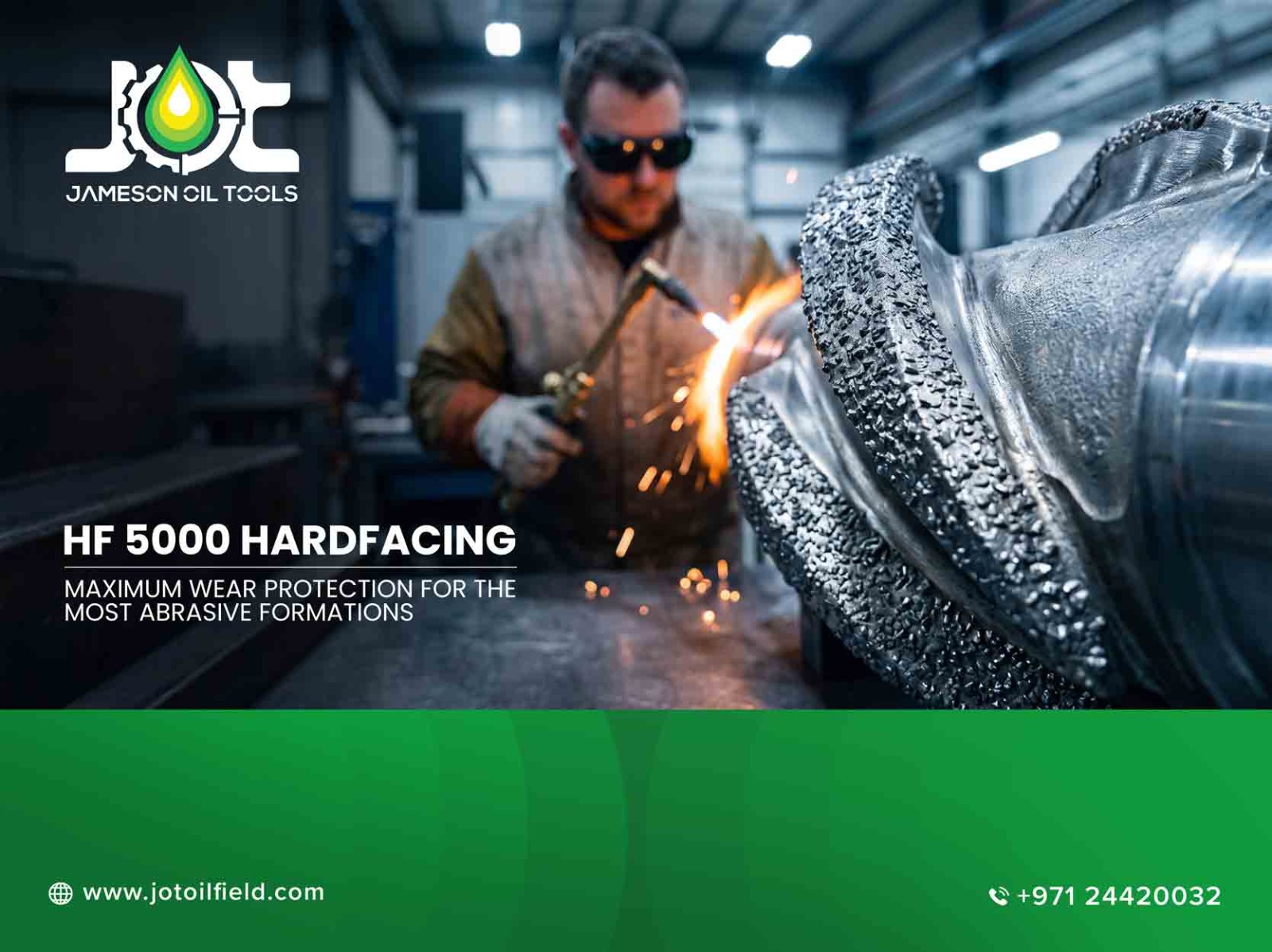
Wear surfaces on stabilizers, mills, and other downhole tools receive hardfacing to resist abrasion in demanding formations.
JOT hardfacing solutions include:
Quality checks after hardfacing:
NDT reveals defects that visual inspection cannot detect.
Common NDT methods:
NDT is performed at critical stages - after machining, after welding, and after hardfacing — to ensure structural integrity throughout the tool.
Before release, every tool undergoes complete final inspection:
Quality is only complete when it is documented. Final release includes:
This documentation package gives operators confidence that every tool meets specification - a hallmark of the Best Oilfield Equipment Suppliers.
The quality journey does not end with the first delivery. Tools returning from the field undergo the same disciplined checkpoints during refurbishment:
This ensures refurbished tools return to the rig floor with the same reliability as new equipment.
As a leading Oil & Gas Equipment Supply & Service Company, JOT Oilfield Services builds quality into every stage of manufacturing:
We support operators across the UAE, Oman, and Saudi Arabia with downhole tools manufactured and refurbished to perform reliably in the most demanding drilling environments.
Reliable downhole tools are not inspected into existence - they are built through disciplined quality control at every checkpoint, from raw steel verification to final documentation. Each stage of the journey protects the next, and together they protect the operator's wellbore, budget, and safety.
At JOT Oilfield Services, our end-to-end quality process ensures that every stabilizer, mill, fishing tool, and crossover sub that leaves our facility is ready to perform from the moment it reaches the rig floor.
Browse our comprehensive catalogue for a diverse range of high-quality oil and gas equipment solutions.