
Stabilizers are essential drilling tools that control hole deviation, maintain directional accuracy, and optimize weight transfer to the bit. Drilling stabilizer selection plays a critical role in improving drilling efficiency, maintaining hole quality, and ensuring overall project success.
At JOT Oilfield Services, we manufacture stabilizers optimized for Middle Eastern drilling conditions. This guide helps you select the perfect stabilizer for your specific application.
Stabilizers are cylindrical tools with blades positioned strategically in the drill string to:
Blade Types
1. Formation Type and Hardness
Soft Formations (sandstone, clay):
Medium/Hard Formations (limestone, dolomite):
Abrasive Formations:
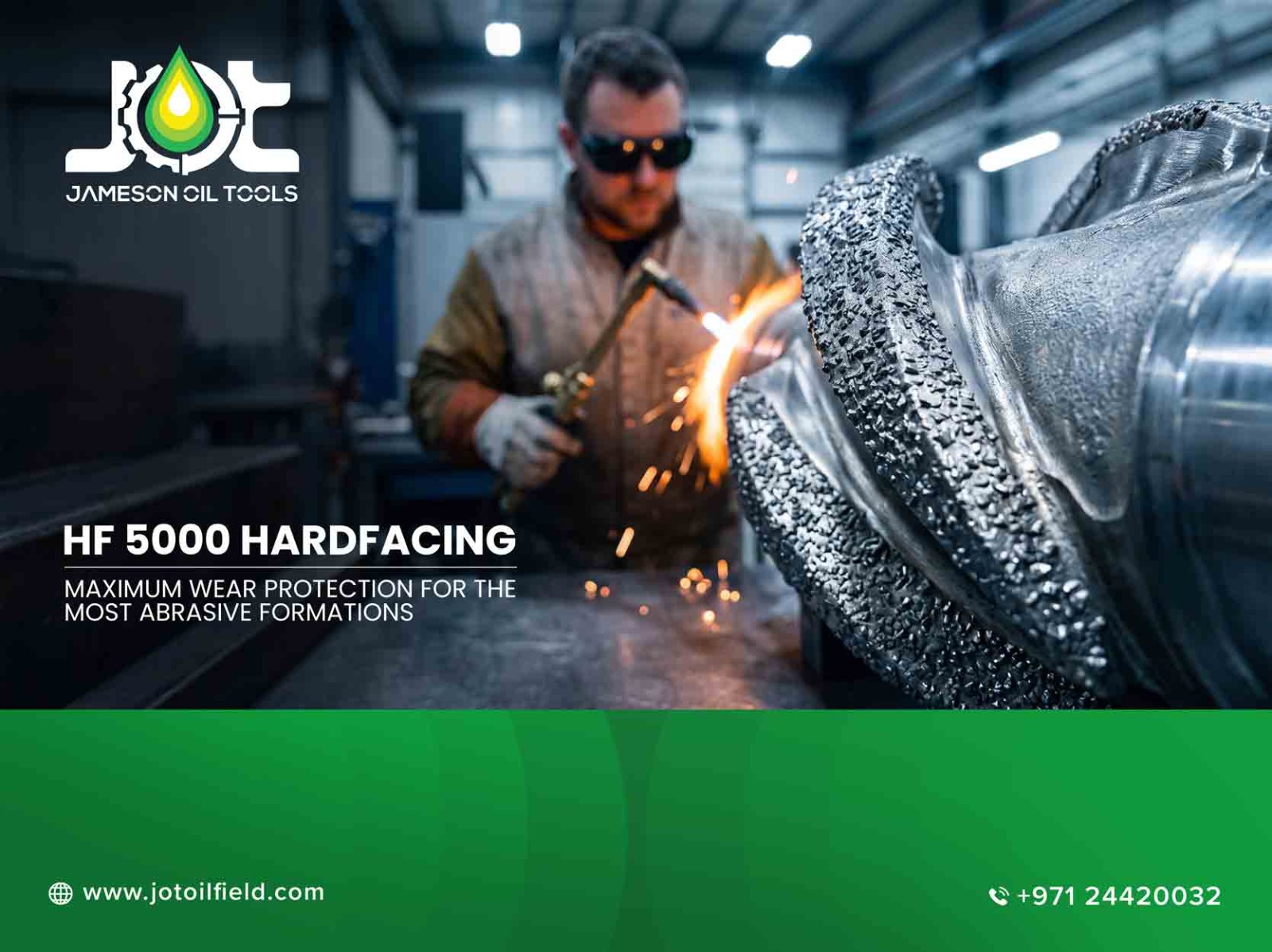
Premium tungsten carbide hardfacing essential.
2. Well Trajectory Requirements
Vertical Wells:
Directional/Build Wells:
Horizontal/Lateral Sections:
3. Drill String Position
Integral Blade Stabilizers
Sleeved Stabilizers
Non-Magnetic Stabilizers
Manufacturing Standards
Available Sizes: 6″ to 17-1/2″ OD
Blade Heights: 1.5″ to 3″ (application specific)
Hardfacing Options: HF 1000/2000/3000 grades
Near-Bit Stabilizer (1-3 joints above bit)
String Stabilizer (midpoint of BHA)
Multiple Stabilizer Configurations
JOT Service: Complete refurbishment with hardfacing restoration.
The right stabilizer transforms drilling performance. Effective drilling stabilizer selection based on formation, trajectory, and placement optimizes hole quality, reduces deviation, and extends bit life. JOT Oilfield Services offers stabilizers engineered for Middle Eastern conditions with precision manufacturing and hardfacing expertise.
Need help selecting the perfect stabilizer for your operation? Contact JOT today for expert consultation in the UAE, Oman, or Saudi Arabia.
Browse our comprehensive catalogue for a diverse range of high-quality oil and gas equipment solutions.