
Oilfield tools operate under some of the most demanding conditions in the energy industry. Extreme abrasion, high temperatures, impact, friction, and continuous mechanical loading can rapidly wear critical components such as stabilizers, motor sleeves, and other downhole tools.
When conventional wear protection is not enough, HF 5000 hardfacing provides an advanced solution for applications requiring high wear resistance and reliable performance under severe operating conditions.
At JOT Oilfield Services, HF 5000 hardfacing is part of our specialized wear-protection solutions for demanding oilfield applications across the UAE, Oman, and Saudi Arabia.
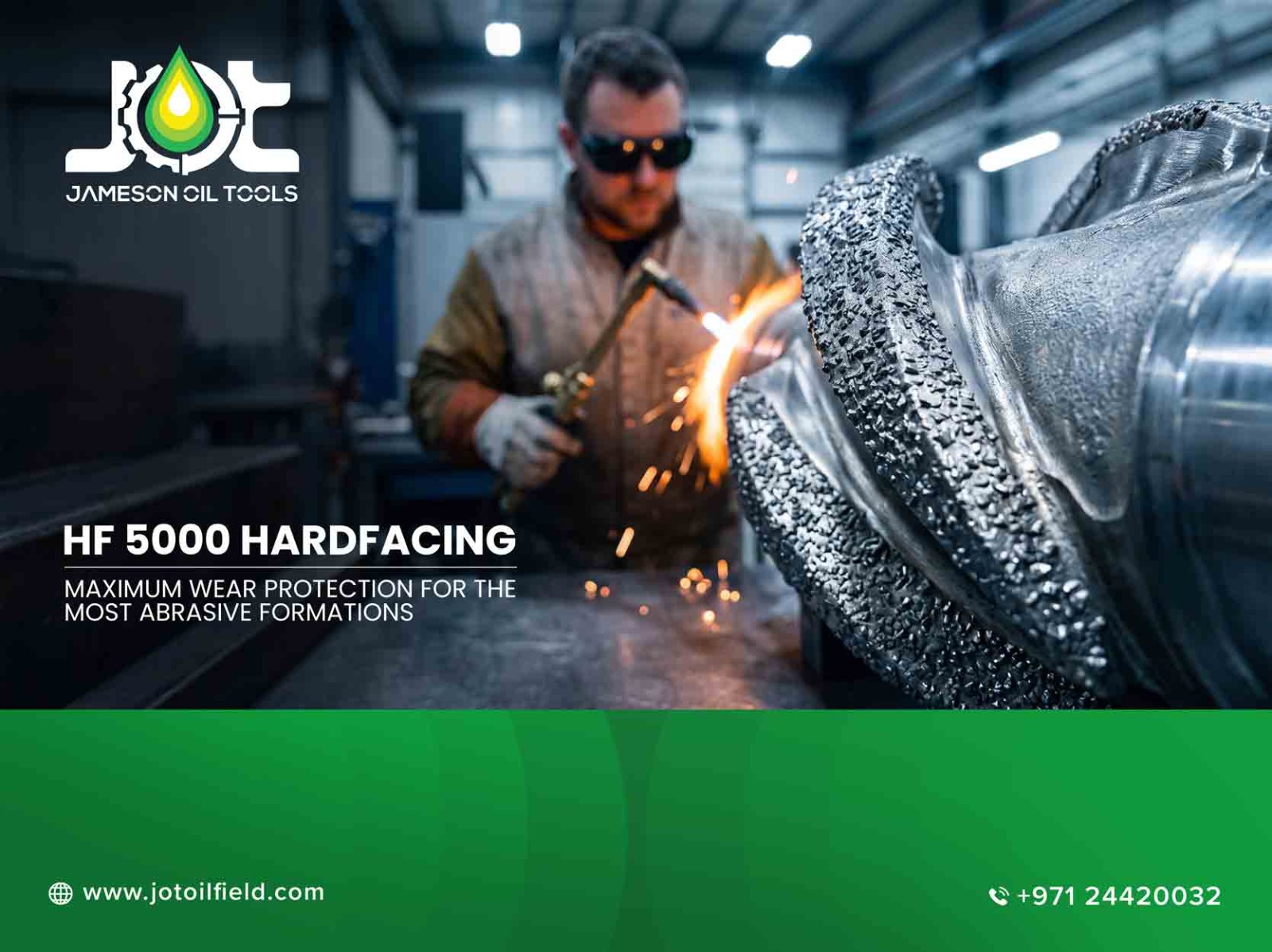
HF 5000 is a high-performance hardfacing solution designed to protect oilfield tool surfaces against severe wear.
The process uses an oxy-acetylene application method, where tough molten carbide particles of varying sizes are held within a nickel-chrome matrix. This combination provides strong bonding and improved surface wear characteristics. JOT specifies surface hardness levels of over 40 HRC for HF 5000.
The primary objectives of HF 5000 hardfacing are to:
For demanding applications, selecting the appropriate hardfacing system can have a direct impact on tool reliability and operational efficiency.
Downhole tools can experience severe wear when operating in highly abrasive formations or elevated-temperature environments.
Common challenges include:
As wear progresses, stabilizer blades, sleeves, and other critical surfaces can lose their original geometry.
This can affect tool performance and increase the frequency of refurbishment or replacement.
HF 5000 provides an additional layer of protection where demanding operating conditions require enhanced surface durability.
The carbide particles within the nickel-chrome matrix provide a wear-resistant surface designed for demanding applications.
This helps protect critical surfaces from:
Improved wear resistance can help tools maintain their functional surfaces for longer periods.
Hardfacing performance depends not only on carbide hardness but also on how effectively the wear-resistant material is bonded to the base component. HF 5000 uses a nickel-chrome matrix to hold the carbide particles and provide strong bonding characteristics. This makes the hardfacing layer suitable for applications where surface durability and retention are important.
One of the key applications highlighted by JOT for HF 5000 is high-temperature operation. JOT identifies HF 5000 as suitable for geothermal applications above 350°C, making temperature capability an important differentiator from more general hardfacing grades. This makes HF 5000 particularly relevant when both wear resistance and high-temperature performance are required.
Stabilizers and motor sleeves are exposed to continuous contact, friction, and abrasive conditions during drilling.
Excessive wear can lead to:
JOT provides hardfacing services for stabilisers and motor sleeves, with different hardfacing solutions selected according to the operating environment. HF 5000 can be considered when applications demand high-performance wear protection, particularly under severe conditions.
Selecting the correct hardfacing grade depends on the formation, operating environment, tool type, and expected wear conditions.
|
Hardfacing |
Typical Application |
|
HF 1000 |
Softer to medium formations |
|
HF 2000 |
Medium formations |
|
HF 3000 |
Medium to hard formations |
|
HF 4000 |
High-wear applications using carbide inserts |
|
HF 5000 |
High-performance and high-temperature applications |
JOT's hardfacing service page describes HF 1000, HF 2000, HF 3000, HF 4000 and HF 5000 as different solutions for different operating requirements.
The goal is not simply to choose the hardest option. The hardfacing grade should match the actual drilling environment and tool requirements.
HF 5000 may be appropriate when tools are exposed to particularly demanding operating conditions.
Consider HF 5000 when:
A proper application assessment should consider the formation, tool design, temperature, expected wear mechanism, and operational parameters before selecting a hardfacing grade.
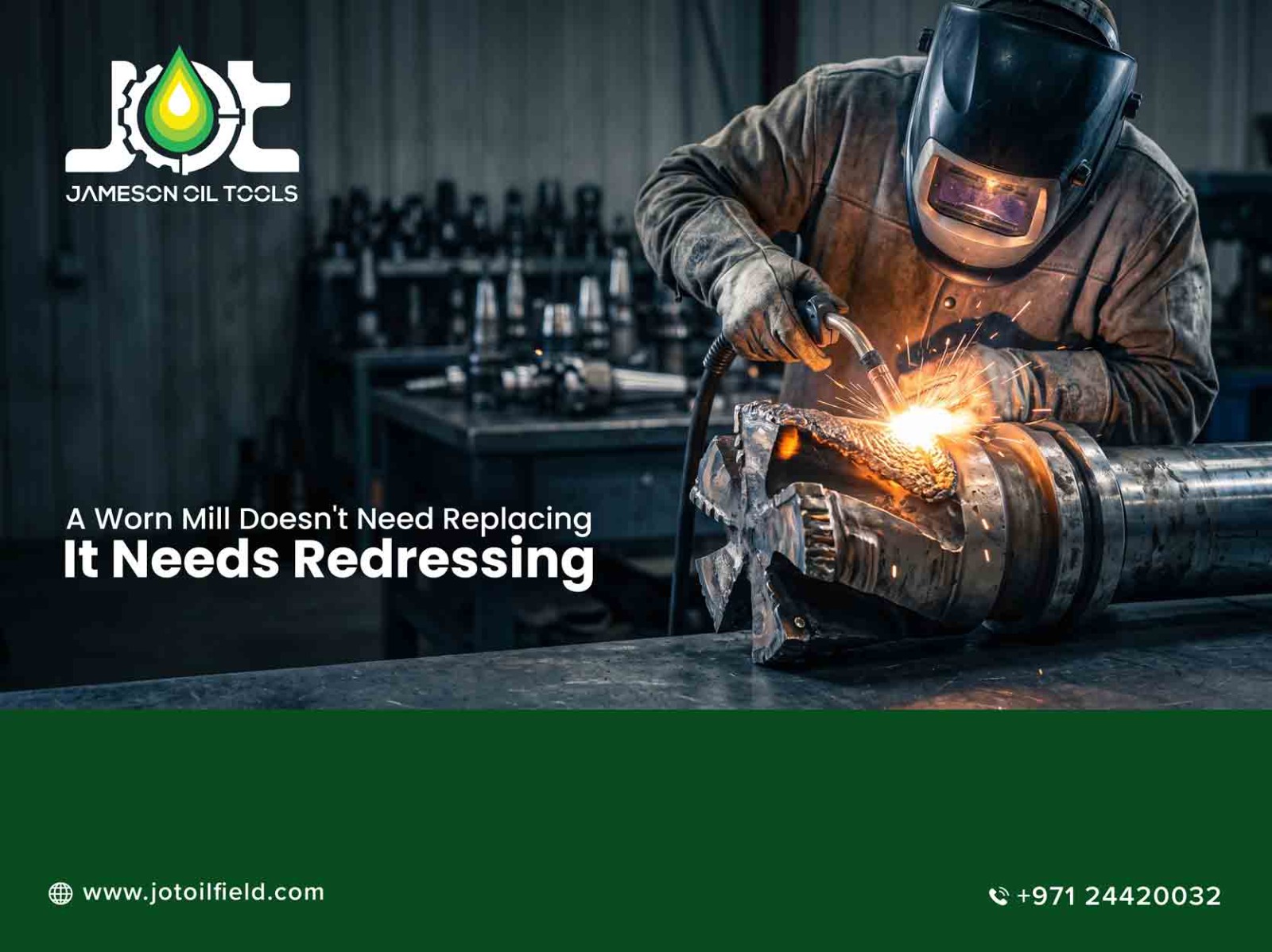
Hardfacing is not limited to newly manufactured tools. Used stabilizers, sleeves, and other components can often be refurbished when their underlying structure remains suitable for further service.
A refurbishment process may include:
This approach can help operators recover the value of existing equipment rather than automatically replacing the entire component. JOT's refurbishment capabilities include hardfacing restoration, dressing and redressing of milling tools, inspection, and NDT services.
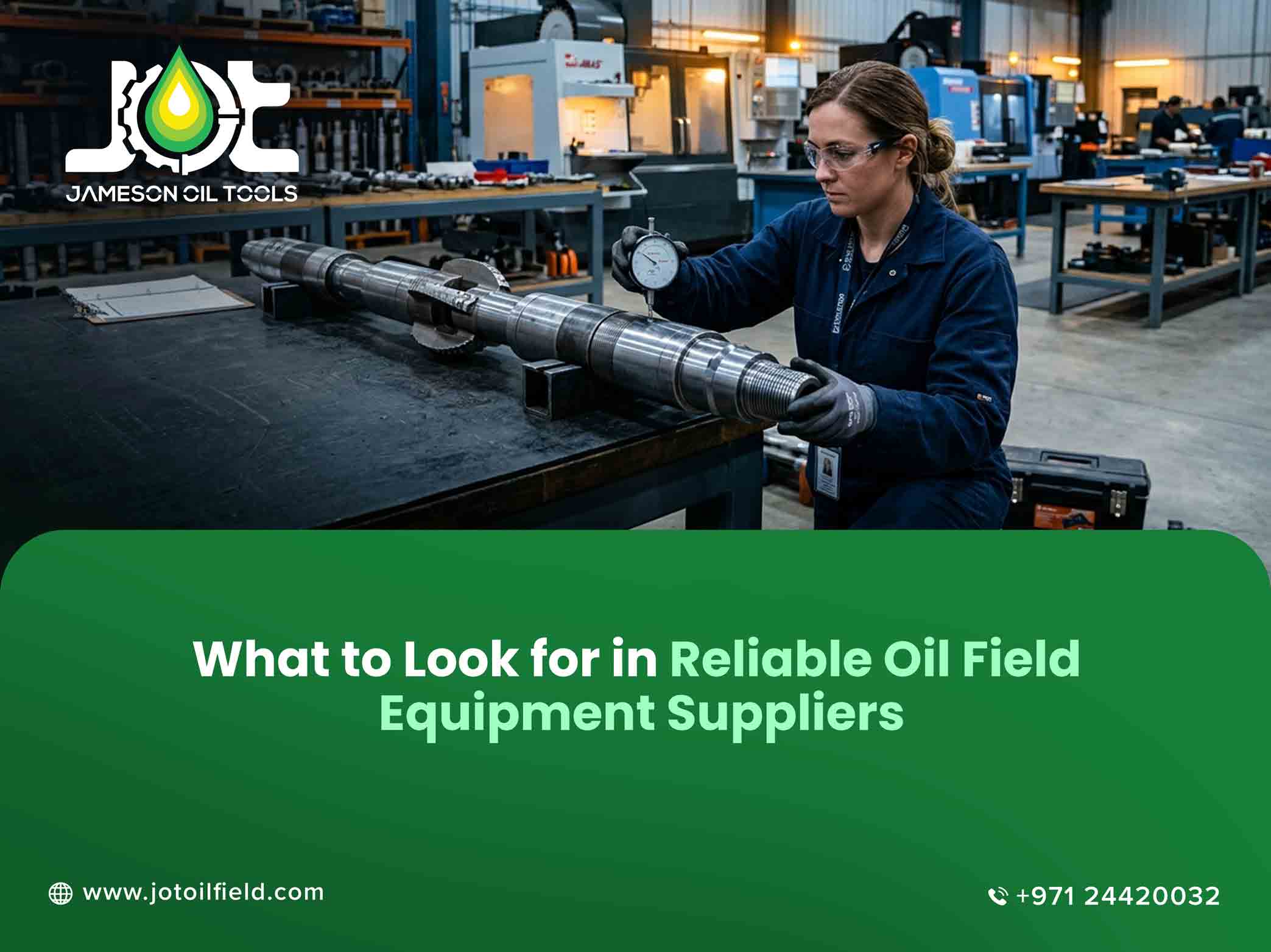
Hardfacing quality is just as important as the hardfacing material itself.
Following application, critical checks can include:
JOT's manufacturing quality-control process specifically identifies visual inspection, hardfacing thickness and coverage verification, gauge measurement, and carbide distribution assessment as post-hardfacing checks.
Proper inspection helps ensure that the finished tool is ready for demanding field conditions.
For oil field supply companies, providing the right wear-protection solution is an important part of supporting drilling operations.
A reliable supplier should understand that different formations and applications require different tool configurations.
This includes:
This integrated approach helps operators maintain equipment availability while controlling maintenance and replacement costs.
Experienced oil field equipment manufacturers combine manufacturing precision with appropriate surface-treatment technologies.
Hardfacing must work together with:
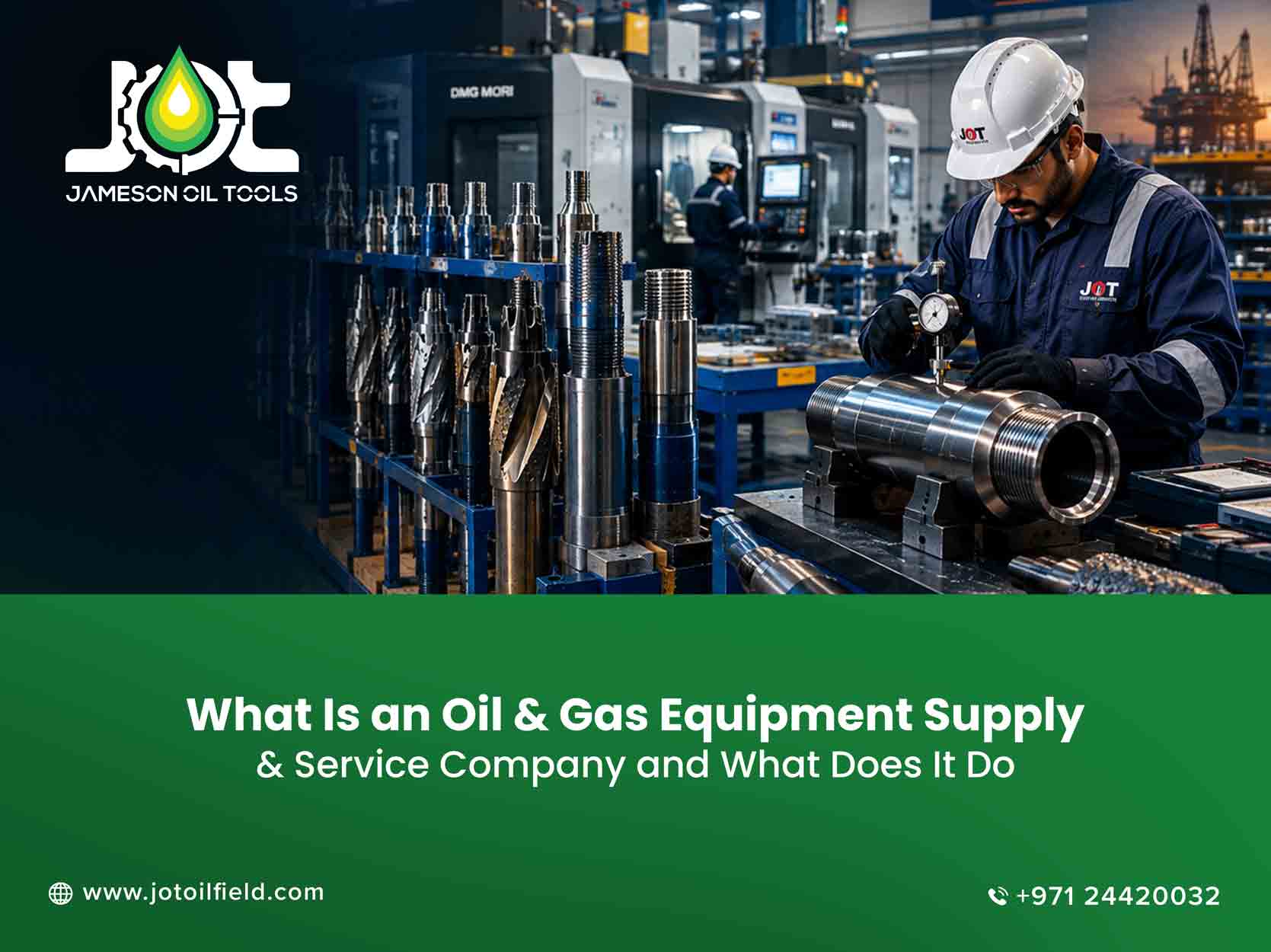
JOT's manufacturing capabilities include precision machining, thread inspection, hardfacing, NDT, and dimensional verification, supporting the production and refurbishment of downhole tools.
As an Oil & Gas Equipment Supply & Service Company, JOT Oilfield Services provides integrated manufacturing, refurbishment, inspection, and hardfacing solutions.
Our capabilities include:
JOT supports oilfield operations across the UAE, Oman, and Saudi Arabia with solutions designed for demanding drilling environments.
There is no single hardfacing grade suitable for every drilling environment.
Before selecting a solution, operators should consider:
Formation: How abrasive and hard is the formation?
Temperature: Will the tool operate under elevated temperatures?
Tool type: Is the application for a stabilizer, motor sleeve, mill, or another component?
Wear mechanism: Is the primary concern abrasion, impact, erosion, or a combination?
Run length: How long must the tool maintain its performance?
Refurbishment requirements: Can the existing tool be restored rather than replaced?
Working with experienced oilfield services providers can help operators match the hardfacing solution to the actual application.
HF 5000 hardfacing provides a high-performance wear-protection solution for demanding oilfield applications where severe wear and elevated temperatures create significant challenges. Its carbide-based wear-resistant surface and nickel-chrome matrix are designed to provide strong bonding and improved surface durability, while JOT identifies HF 5000 as suitable for high-temperature geothermal applications above 350°C.
For operators, the right hardfacing solution can help protect critical tools, extend service life, reduce maintenance requirements, and improve operational reliability. As one of the oil and gas equipment industry's supporting manufacturers and service providers, JOT Oilfield Services combines hardfacing expertise with precision manufacturing, refurbishment, and inspection capabilities to deliver reliable solutions for demanding drilling environments across the GCC.
Need high-performance wear protection for your drilling tools? Contact JOT Oilfield Services to discuss the right hardfacing solution for your application.
Browse our comprehensive catalogue for a diverse range of high-quality oil and gas equipment solutions.