The Importance of Thread Inspection in Downhole Tool Performance



Oilfield tools operate in some of the harshest industrial environments, where they are constantly exposed to extreme pressure, high temperatures, heavy loads, abrasion, corrosion, and continuous mechanical stress. In such demanding conditions, the durability and reliability of drilling and downhole tools are critical for maintaining operational efficiency and reducing costly downtime.
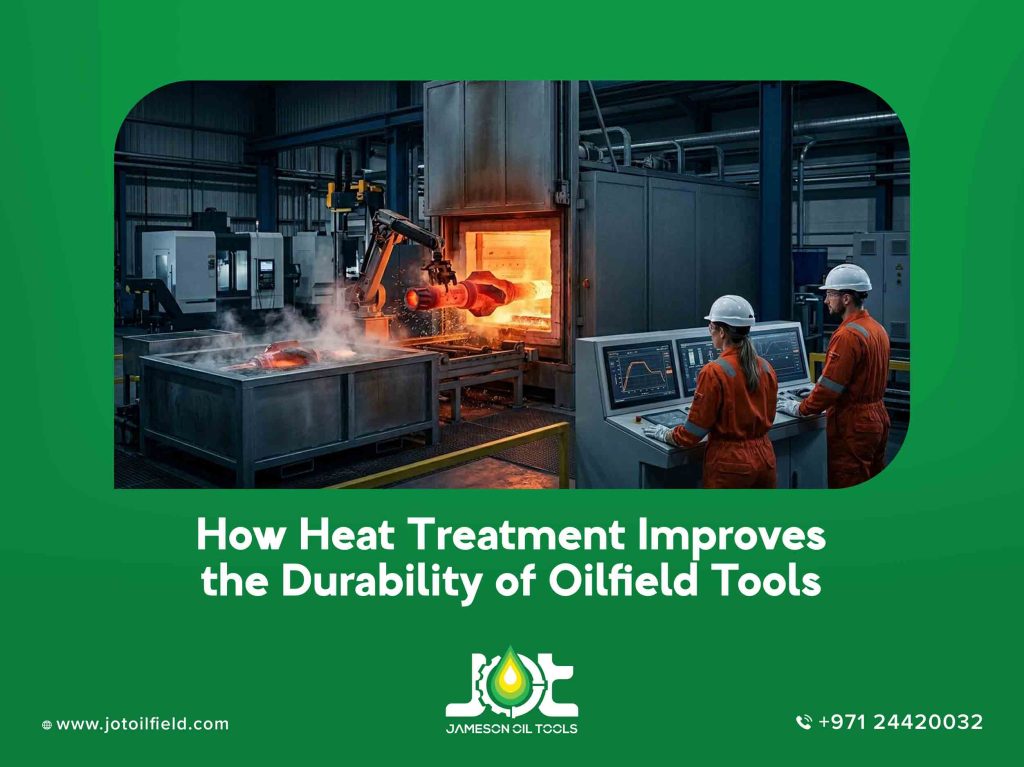
One of the most important manufacturing processes used to improve the performance and lifespan of oilfield equipment is heat treatment. By carefully controlling heating and cooling processes, heat treatment enhances the mechanical properties of metals, making tools stronger, tougher, and more resistant to wear and fatigue.
Today, heat treatment plays a vital role in the manufacturing and refurbishment of oilfield tools used across drilling, milling, fishing, and production operations.
Heat treatment is a controlled industrial process used to alter the physical and mechanical properties of metals and alloys.
The process typically involves:
The primary goal is to improve properties such as:
For oilfield applications, these improvements are essential for ensuring reliable tool performance in aggressive downhole environments.
Oilfield tools face continuous exposure to:
Without proper material treatment, tools can quickly experience:
Heat treatment helps oilfield tools withstand these conditions while maintaining structural integrity and operational reliability.
Hardening increases the strength and wear resistance of metal components by heating and rapidly cooling the material.
This process is commonly used for:
Tempering is performed after hardening to reduce brittleness while maintaining strength.
Tempering is essential for balancing hardness and flexibility in oilfield tools.
Annealing softens the material and relieves internal stress caused during machining or welding.
This process is often used during tool manufacturing and refurbishment operations.
Normalizing improves grain structure and enhances the overall mechanical properties of steel components.
Downhole drilling environments often contain abrasive rock formations that can rapidly wear tool surfaces.
Heat treatment significantly improves:
This allows tools to maintain performance for longer operational periods, reducing the frequency of repairs and replacements.
Oilfield tools are subjected to repeated cyclic loading during drilling operations. Over time, this can cause fatigue cracks that lead to sudden equipment failure.
Proper heat treatment improves fatigue resistance by:
This helps extend tool lifespan and improves operational reliability.
Many oilfield operations involve exposure to corrosive environments containing:
Heat treatment, combined with proper material selection, can improve resistance to corrosion-related damage and reduce the risk of premature failure.
Heat treatment is widely used in the production and refurbishment of:
These components require high mechanical strength and durability to perform reliably under extreme operating conditions.
Heat treatment is not only important during manufacturing but also during refurbishment processes.
Refurbishment services often use heat treatment to:
This allows refurbished tools to return to operation with improved durability and performance.
Proper heat treatment offers several operational advantages, including:
These benefits make heat treatment an essential process in modern oilfield manufacturing and maintenance operations.
The effectiveness of heat treatment depends heavily on process accuracy and quality control.
Critical factors include:
Proper quality control ensures consistent tool performance and long-term reliability.
Heat treatment plays a crucial role in improving the durability, strength, and reliability of oilfield tools operating in harsh drilling environments. By enhancing wear resistance, fatigue strength, and toughness, heat-treated components can withstand the demanding conditions of modern oil and gas operations.
As drilling operations continue to push equipment to higher performance levels, proper heat treatment remains essential for extending tool life, reducing downtime, and maintaining operational efficiency.
For oilfield manufacturers and service providers, investing in advanced heat treatment processes is a key step toward delivering reliable, high-performance equipment for the energy industry.




Browse our comprehensive catalogue for a diverse range of high-quality oil and gas equipment solutions.